The White House vs. Moonshot AI: Fable Model Distillation and the Geopolitics of Code
A Geopolitical Shockwave in AI
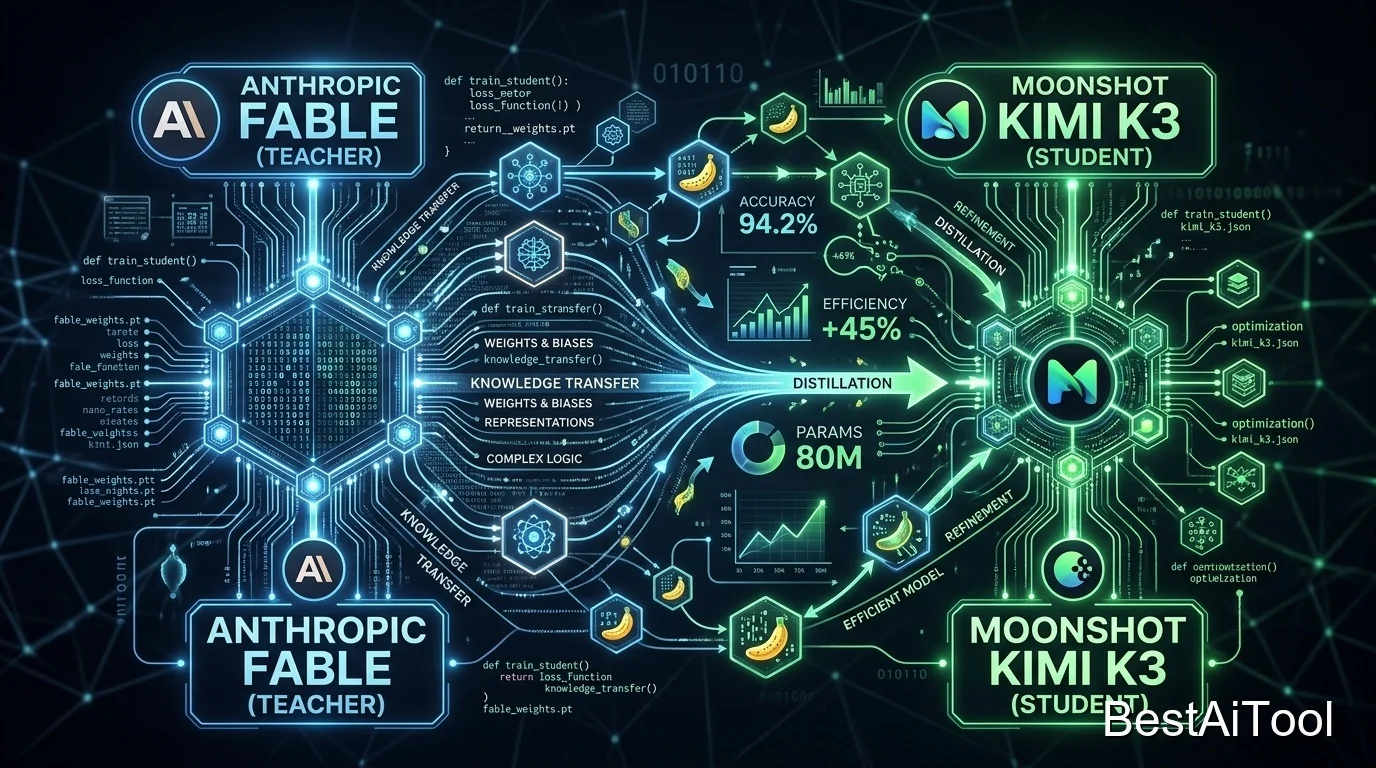
On July 22, 2026, the U.S. White House publicly accused China-based Moonshot AI of "covert industrial distillation" of Anthropic's private Fable model during the development of their new Kimi K3 model.
This accusation has sparked a massive debate on the future of open-weights AI, safety guardrails, and international IP enforcement in the software world. But behind the headlines, what does this mean for active developers and the codebases we write?
What is Model Distillation?
Model distillation is the process of training a smaller, cheaper "student" model using the outputs and reasoning steps of a larger, highly capable "teacher" model. Instead of training a model from scratch on raw internet data, the student learns from the high-quality explanations, logic, and code structures generated by the teacher.
This dramatically reduces training costs and training time. However, most commercial AI licenses (including Anthropic's and OpenAI's terms of service) strictly prohibit using their outputs to train competing models.
Key Takeaways from the Controversy
The White House claims that Moonshot AI bypassed these restrictions by running millions of API requests through shell companies, extracting Anthropic's proprietary reasoning chains to boost Kimi K3's coding capabilities.
- The Performance Boost: Kimi K3, a 2.8T open-weight model, scores remarkably close to Anthropic Fable on coding benchmarks, raising suspicions.
- The Intellectual Property Debate: Can you "own" the logical outputs of an AI? Moonshot AI denies the claims, asserting Kimi K3 was trained on proprietary open-source datasets.
- Ecosystem Impact: Geopolitical tensions could lead to stricter API logging, gated developer access, and IP-filtering tools built into hosting platforms like GitHub and AWS.
The Developer Dilemma
For freelance developers, open-weight models like Kimi K3 offer unprecedented cost efficiency. You can run Kimi K3 locally on custom infrastructure without paying API fees per token. However, if the model's training data becomes subject to legal blockades or export bans, projects relying on Kimi K3 could face compliance risks.
Looking Ahead
As the line between proprietary reasoning and open-weights distillation blurs, expect licensing terms to become a major criteria for client project approvals. Understanding where your model's knowledge comes from is no longer just a technical question—it's a compliance requirement.
Explore Prompt Library
Browse prompt packs and copy-ready prompts for coding, research, writing, and client work.
Explore Prompt Library →